
Executive Summary: Capturing High-Yield Yields Along Delhi-NCR's Arterial Spine
In the evolving landscape of Delhi-NCR real estate, institutional capital is systematically pivoting toward prime residential assets that offer robust commercial-grade yields. For private wealth managers, family offices, and institutional funds, acquiring a luxury residential apartment near Dwarka Expressway upto UER represents a premier strategic play. Driven by massive infrastructure delivery, rapid corporate decentralization, and an influx of Global Capability Centers (GCCs), this micro-market corridor has transformed into an institutional-grade investment destination.
At ROI On Property, our research indicates that meticulously selected ultra-luxury properties in this corridor are consistently outperforming traditional commercial office spaces in risk-adjusted net yields. By aligning portfolio allocations with Grade-A MNC tenant covenants, sophisticated investors can secure resilient cash flows insulated from broader economic volatility.
Macro-Spatial Intelligence: The Dwarka Expressway and UER Corridor Dynamics
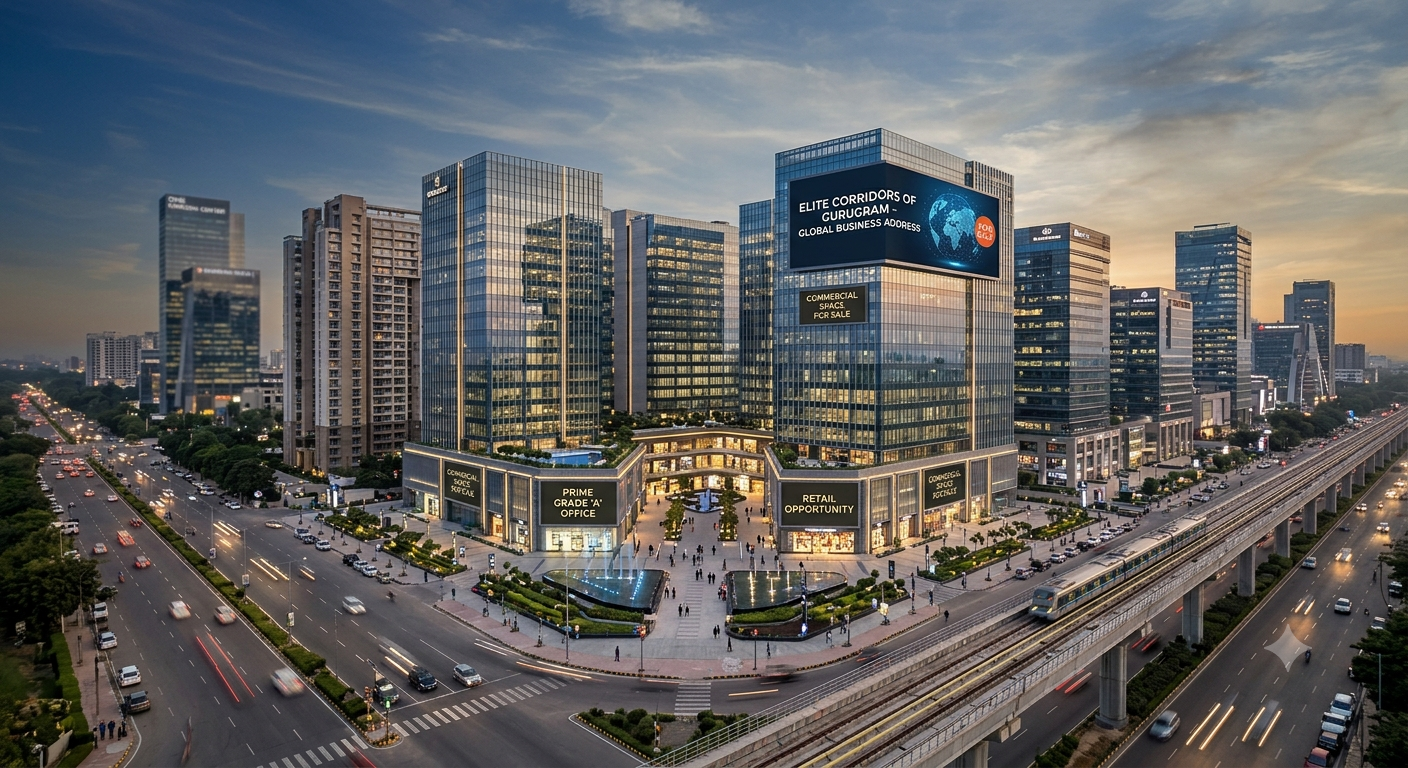
The convergence of the Dwarka Expressway (Northern Peripheral Road) and the Urban Extension Road (UER II) has created an elite economic corridor within the Delhi-NCR micro-market. This spatial integration offers unmatched logistical advantages:
- Seamless Airport Connectivity: Direct, signal-free access to Indira Gandhi International (IGI) Airport within 15 to 20 minutes, a primary non-negotiable metric for multinational C-suite executives and expatriate talent.
- Arterial Multi-Modal Access: Immediate proximity to the Western Peripheral Expressway (KMP), NH-48, and the upcoming Global City project, driving immense capital appreciation and rental demand.
- Strict zoning approvals and integrated mixed-use master planning that safeguards high-density residential clusters from industrial encroachment, preserving long-term asset values.
To evaluate these spatial advantages with granular precision, institutional investors frequently leverage our proprietary ROI On Property's Spatial Audits, mapping footfall, transit velocity, and micro-location premium differentials.
The Core Investment Thesis: Grade-A MNC Covenants & Lease Structures
The defining characteristic of top-tier residential assets along the Dwarka Expressway-to-UER corridor is the quality of occupancy. Unlike speculative retail or volatile residential leasing, luxury units here are aggressively targeted by Fortune 500 corporations, multinational banks, and tech giants housing their senior leadership.
Anatomy of an Institutional Residential Lease
Institutional-grade lease agreements in this micro-market deviate significantly from standard retail rentals. Key structural parameters include:
- Long-Term Lease Horizons: Standard lock-in periods extending across robust 9-year structural frameworks (typically structured as 3+3+3 terms).
- Predictable Escalation Matrices: Built-in rent escalations averaging 15% every 3 years, providing a built-in hedge against inflationary pressures.
- Triple-Net (NNN) Operating Structures: Maintenance, property taxes, and auxiliary facility management costs are fully absorbed by the corporate tenant or managed via stringent triple-net CAM structures, protecting the investor's net operating income (NOI).
Financial Modeling: Yields, Cap Rates, and Comparative Benchmarks
When analyzing high-return property investments in Gurugram's core corridors, mathematics dictates strategy. Below is an institutional benchmark comparing luxury residential assets near the Dwarka Expressway-UER corridor against traditional asset classes.
| Asset Class & Micro-Market | Net Rental Yield | Lease Structure | Escalation Terms | Cap Rate |
|---|---|---|---|---|
| Luxury Residential (Dwarka Exp. to UER, MNC Tenant) | 8.2% - 9.6% | 9-Year Corporate Lease | 15% Every 3 Years | 7.8% |
| Grade-A Suburban Office Space (Gurugram Core) | 7.0% - 7.5% | 6-Year Lock-in | 10% Every 3 Years | 6.5% |
| High-Street Retail (Delhi-NCR Arterial) | 6.5% - 8.0% | 9-Year Commercial | 15% Every 3 Years | 6.0% |
| Traditional Unmanaged Residential (Golf Course Ext.) | 2.8% - 3.5% | 11-Month Standard | 5% Annual (Discretionary) | 2.5% |
As illustrated in the metrics above, structuring a luxury residential asset with a corporate lease covenant dramatically compresses risk while expanding net yields well above historical residential averages.
Risk Mitigation and Portfolio Integration
While the quantitative metrics are compelling, deploying capital into the Dwarka Expressway micro-market requires rigorous due diligence. Investors must evaluate title integrity, developer delivery track records, and the structural longevity of the building envelope. Mitigating vacancy risk involves partnering with corporate relocation agencies and securing assets within integrated townships featuring clubhouses, wellness facilities, and multi-tier security systems demanded by multinational assignees.
Navigating these variables requires bespoke advisory support. Connect with our senior strategists at the ROI On Property Private Advisory Desk to review off-market inventory, legal title clearances, and customized cash flow models tailored to your mandate.
Conclusion: The Strategic Imperative for Institutional Allocators
The convergence of infrastructure maturity, corporate decentralization, and elite residential demand makes the Dwarka Expressway-to-UER corridor a standout performer in Indian real estate. By acquiring a luxury residential apartment near Dwarka Expressway upto UER backed by a stringent corporate lease, investors secure a defensive, high-yielding asset class that combines the stability of fixed income with the capital growth of prime urban real estate.