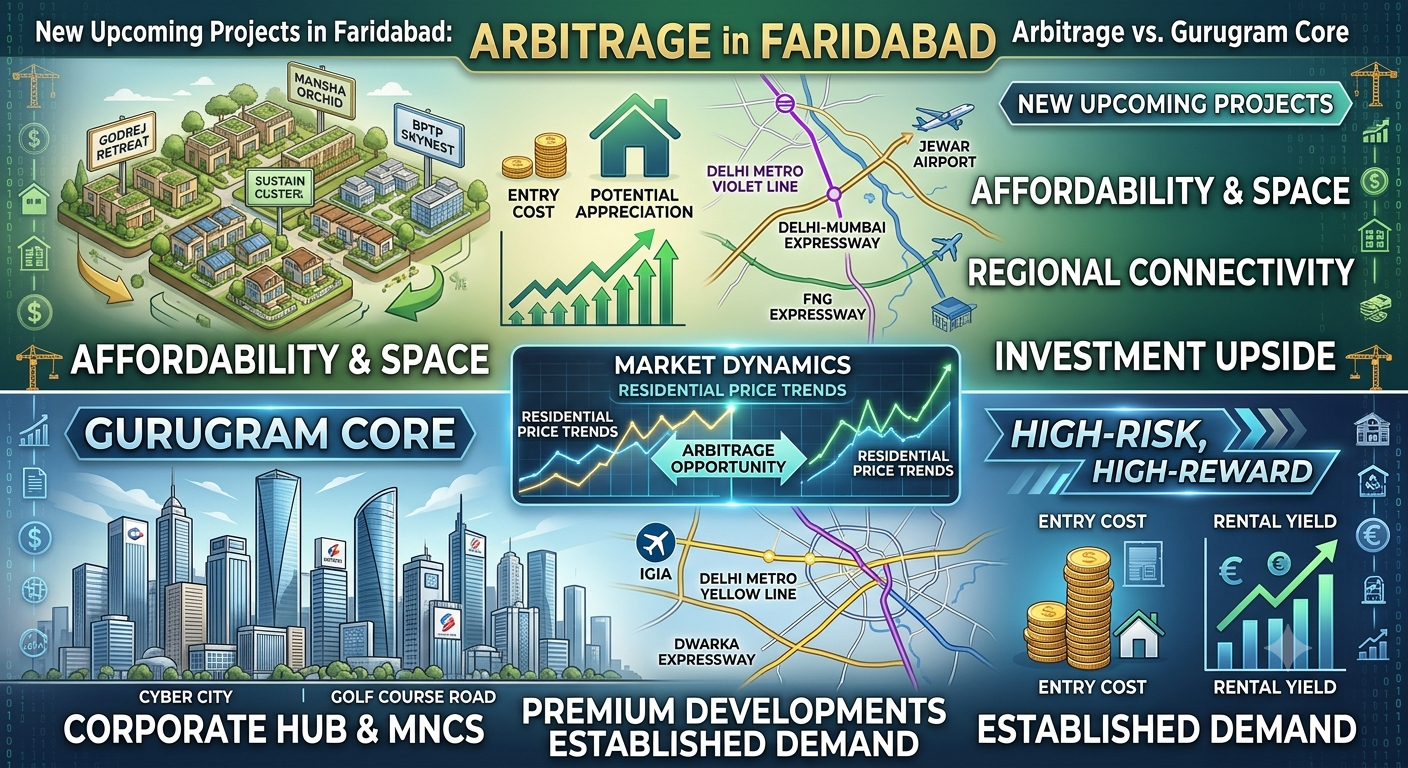

For high-net-worth individuals (HNIs), family offices, and NRI investors, pre-leased commercial property in Gurugram represents the premier institutional asset class for predictable passive yield. However, conflating gross rental yield with true net capitalization rate is the single most common mistake made by private buyers. In Gurugram's two marquee business arteries—DLF Cyber City and Golf Course Extension Road—differences in operational expenditures, CAM reconciliations, and escalation schedules significantly alter real investor cash flows.
The Fundamental Distinction: Gross Yield vs. Net Cap Rate
Marketing brochures frequently advertise gross yields calculated simply as:
Gross Yield = (Annual Contractual Rent / Asset Purchase Price) × 100
While gross yields in Cyber City hover between 8.4% and 9.4%, your true investment return is dictated by the Net Capitalization Rate (Net Cap Rate):
Net Cap Rate = (Net Operating Income (NOI) / All-In Acquisition Cost) × 100
Where Net Operating Income deducts non-reimbursable Common Area Maintenance (CAM), municipal property taxes, insurance, statutory management fees, and structural vacancy allowances (typically underwritten at 2.5% to 5.0%).
Head-to-Head Comparison: DLF Cyber City vs. Golf Course Extension Road
The table below provides forensic cash-flow modeling comparing a standard 5,000 sq.ft. Grade-A pre-leased office asset across both corridors:
| Financial Metric | DLF Cyber City (Core CBD) | Golf Course Ext Road (SPR Growth Axis) |
|---|---|---|
| Average Capital Rate | ₹26,000 – ₹36,000 / sq.ft. | ₹18,000 – ₹28,000 / sq.ft. |
| Average Monthly Rental Rate | ₹185 – ₹260 / sq.ft. | ₹125 – ₹180 / sq.ft. |
| Gross Rental Yield | 8.4% – 9.1% | 8.3% – 9.4% |
| Operational Deductions (CAM/Tax/Insurance) | 0.50% – 0.65% | 0.65% – 0.85% |
| Net Cap Rate (Underwritten NOI) | 7.8% – 8.5% | 7.6% – 8.4% |
| Standard Lease Covenant | 9 Years (3+3+3 or 5+4), 3-Yr Lock-in | 9 Years (3+3+3), 3-Yr Lock-in |
| Periodic Escalation Clause | 15% every 36 months | 15% every 36 months |
| Tenant Credit Profile | Fortune 500 Global Tech & BFSI | Unicorn Tech, Indian Corporates & Retail |
Underwriting the 15% Triennial Rent Escalation Model
The compounding engine of Indian commercial real estate is the contractual 15% rental escalation executed every three years. Consider an investor deploying ₹10 Crore into a pre-leased Cyber City asset yielding a starting gross rent of ₹85 Lakhs per annum (8.5% initial gross yield):
- Years 1–3: Annual Rental Income: ₹85,00,000 / year (Cumulative: ₹2.55 Crore)
- Years 4–6 (15% Escalation): Annual Rental Income: ₹97,75,000 / year (Cumulative: ₹2.93 Crore)
- Years 7–9 (15% Escalation): Annual Rental Income: ₹1,12,41,250 / year (Cumulative: ₹3.37 Crore)
By Year 8, the cash-on-cash yield on the original ₹10 Crore capital outlay expands to 11.24%, providing a potent hedge against inflation while the underlying commercial land and structure appreciate in capital value.
3 Hidden Yield Leakages to Audit Before Signing
- CAM Reconciliations: Ensure the lease agreement designates Common Area Maintenance (CAM) as a strictly pass-through expense paid directly by the tenant to the facility management provider, preventing developer clawbacks.
- Fit-Out Amortization Covenants: Confirm whether the tenant executed their own interior fit-outs (capex deployment of ₹2,500–₹4,000/sq.ft.). A tenant who invested crores in interior cabling and executive conference rooms has a dramatically higher probability of renewing past the 3-year lock-in period.
- Stamp Duty & Registration Verification: Confirm that the corporate lease deed is legally registered under the Registration Act, 1908, with statutory stamp duties fully discharged. Unregistered lease deeds cannot be relied upon in summary commercial eviction suits.
Access Verified Commercial Opportunities
Explore curated pre-leased commercial properties for sale in Gurugram, or connect with our accredited commercial brokers to review institutional tenant lease agreements today.